


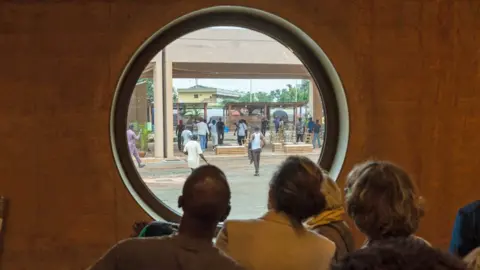
The nation's remarkable new West African Art Museum (Mowaa) has ended up in the center of regional political struggles during the week it was supposed to – but was unable – to welcome visitors to the general public for the initial occasion.
The Major Initiative
The large-scale facility sits in the center of Benin City, capital of the southern state of Edo – and contains an historical dig and facilities created by high-profile British-Ghanaian architect Sir David Adjaye, best known for the Washington African American Museum that was inaugurated in Washington in 2016.
It has been half a decade in the making – and is envisioned to celebrate both the past and the modern times of artistic expression in the area known for the historic artworks, cultural objects looted from the city's royal palace by British soldiers in the 19th Century.
Readiness and Potential
It is notable – and prior to the planned opening, Mowaa was buzzing with staff determined to show it is a institution that can compete with well-known art institutions in the Western world.
Internally preservation experts carefully revealed art pieces from safety materials, checking each artifact and taking meticulous documentation before positioning them on exhibition areas and plinths.
Experts calibrated climate control systems. In the research lab, staff members set up equipment intended to preserve ancient artefacts.
Investment and Economic Plans
The project has been the concept of businessman Phillip Ihenacho – currently Mowaa's managing director.
"I want us to have a substantial economic impact on communities around here," he explained to journalists, noting that he wanted to make this urban center "a cultural destination."
Mowaa, a non-profit Nigerian institution, envisions itself establishing in excess of 30,000 work positions and providing more than $80m each year to the area arts sector through partnerships and events.
Investment and Administrative Problems
It has needed $25m to get here – funds raised from different supporters, such as the French and German governments, the British Museum and the Edo state government.
But currently the regional administration has pulled the rug from under it – revoking the use of the property on which the building was erected.
An official representative stated this was because in the original paperwork it had identified as the Edo-named institution – and it had since dropped "Edo" from its designation.
Unrest and Official Response
This declaration followed demonstrations on recently, when protesters entered the complex calling for it be designated the Royal Benin Museum.
A boisterous group harassed overseas dignitaries at the facility before the inauguration – forcing them to be escorted out under official guard.
Head of state Bola Tinubu has even stepped in to work to address the tensions, creating a presidential committee to address the controversy.
Governance Issues
But how has this become so divisive – and such a public relations crisis?
Much of it stems from internecine rivalries at a regional government level, as it was the former state leader Godwin Obaseki – whose governance concluded last year – who was a primary advocate of the project.
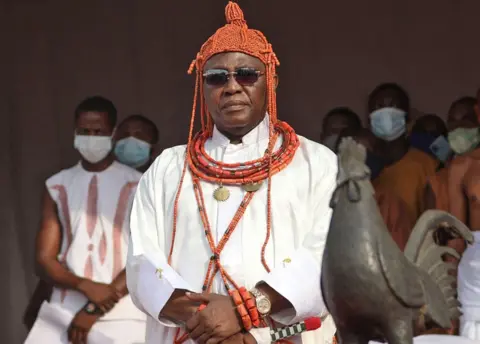
And it appears the government of the recently elected official, a strong supporter of the area king, referred to as the royal figure, may seek more of a stake in the venture. The activists on that day, for example, were insisting that the institution be placed under the control of the royal leader.
The Benin Bronzes Controversy
This brings into focus the disputed topic of the historical artworks, one of the continent's most celebrated historical legacy.
Because though the facility does finally welcome visitors, these objects will be clearly not present.
They are metal, ivory and wooden carvings that once decorated the king's residence of the historical empire before UK forces took them in the late nineteenth century during a military operation.
Nowadays, thousands remain scattered across museums in Europe and North America -- featuring the British Museum, European center and the Metropolitan Museum of Art.
Return Initiatives
Their homecoming has become one of the most disputed conversations in the worldwide cultural sector. Approximately 150 have currently been returned – and more are expected to return.
When plans for the facility in Benin City were originally proposed in 2019, the key players on the country's cultural sector anticipated it would become their perfect venue – a state-of-the-art facility to exhibit them to the international community.
But the issues became confused some time back after the central administration declared that the traditional ruler would be the legal custodian of any returned bronzes – and the royal household pushed for a institution under the royal family's direct control, against the preferences of the former governor.
Strategic Positioning
This left Mowaa in a challenging circumstance: maintaining a specific viewpoint on return while being careful on guardianship – and emphasising its wider mission, which led to|c


